Historical Moon Traditions
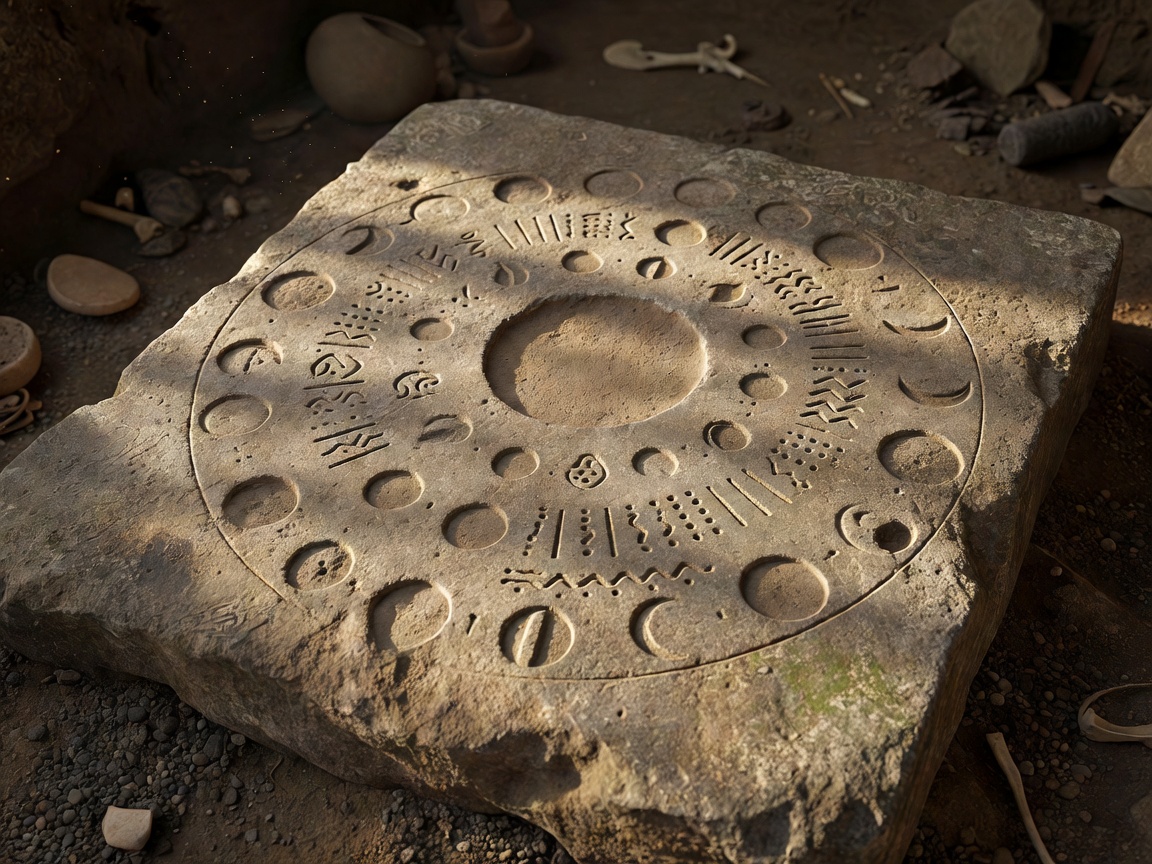
Nearly every early culture built time around the moon before the sun. This is a survey of that heritage, offered as respectful learning rather than borrowed authority.
Lunar, Solar and Lunisolar Calendars Compared
| Calendar type | Basis | Drifts vs. seasons? | Example use |
|---|---|---|---|
| Lunar | 12 lunar months (~354 days) | Yes, ~11 days/year | Islamic Hijri religious dates |
| Solar | Earth's orbit (~365.25 days) | No | Gregorian civil calendar |
| Lunisolar | Lunar months + periodic leap month | Corrected periodically | Chinese calendar, Hebrew calendar |
Mesopotamia: The First Recorded Lunar Calendar
Sumerian and Babylonian astronomers were tracking lunar months on clay tablets by roughly 2100 BCE, recording quarter-phase observations in texts like MUL.APIN. This tradition is widely credited as the origin of the seven-day week, tied to the moon's roughly week-long quarter phases, and it includes some of the earliest known attempts at intercalation — adding leap months to keep festivals aligned with the harvest.
China's Mid-Autumn Festival and the Lunar New Year
The Chinese calendar is lunisolar. The Mid-Autumn Festival falls on the 15th day of the 8th lunar month — always a full moon — and is celebrated with mooncakes and family reunions. Lunar New Year falls on the second new moon after the winter solstice, which is why its Gregorian date shifts each year within a roughly month-long window.
Islamic Hijri Calendar
The Hijri calendar is purely lunar: twelve months of 29 or 30 days, based on direct crescent-moon sighting or calculation, totalling about 354–355 days a year. That's roughly 11 days shorter than a solar year, so months like Ramadan shift about 11 days earlier each Gregorian year, cycling through all four seasons over roughly 33 years.
Wiccan Esbats and the Wheel of the Year
Modern Wicca, a 20th-century pagan revival tradition, holds Esbats at full (and sometimes new) moons, distinct from the eight solar Sabbats of the Wheel of the Year. It's worth noting plainly that this is a modern reconstructed practice rather than an unbroken ancient lineage, even where it draws on older seasonal and lunar symbolism.
Native American Moon Names
The month-by-month "moon name" list popularized by colonial-era almanacs is one simplified version drawn loosely from Algonquian languages — actual naming traditions vary widely by nation and region, and this list should be read as one popularized reference point, not a universal standard.
| Month | Popularized Name |
|---|---|
| January | Wolf Moon |
| February | Snow Moon |
| March | Worm Moon |
| April | Pink Moon |
| May | Flower Moon |
| June | Strawberry Moon |
| July | Buck Moon |
| August | Sturgeon Moon |
| September | Harvest Moon |
| October | Hunter's Moon |
| November | Beaver Moon |
| December | Cold Moon |